Sunday, December 28, 2008

Pedophiles in the Civil Right struggle to have Sex with Kids

(Somebody help me understand where these monsters come from? Can we ship them to some far away island where they can sexually abuse each other? They're out of control... and can't deal with adult situations so they prey on kids.)


Pedophiles in the Civil Right struggle to have Sex with Kids


On the Web, Pedophiles Extend Their Reach

0
John Kuntz/The Plain Dealer via Associated Press

Phillip J. Distasio, who has been charged with raping two boys, has argued on the Web in favor of legalizing sex with children.

At first blush, the two conversations — taking place almost simultaneously in different corners of the Internet — might have seemed unremarkable, even humdrum.

In April, with summer fast approaching, both groups of online friends chatted about jobs at children's camps. Did anyone, one man asked, know of girls' camps willing to hire adult males as counselors? Meanwhile, elsewhere in cyberspace, the second group celebrated the news that one of their own had been offered a job leading a boys' cabin at a sleep-away camp.

But participants in the conversation did not focus on the work. "Hope you see some naked boys in your cabin," a man calling himself PPC responded. "And good luck while restraining yourself from doing anything."

The two groups were made up of self-proclaimed pedophiles — one attracted to under-age girls, the other to boys. Their dialogue runs at all hours in an array of chat rooms, bulletin boards and Web sites set up for adults attracted to children.

But it is no longer just chatter in the ether. What started online almost two decades ago as a means of swapping child pornography has transformed in recent years into a more complex and diversified community that uses the virtual world to advance its interests in the real one.

Today, pedophiles go online to seek tips for getting near children — at camps, through foster care, at community gatherings and at countless other events. They swap stories about day-to-day encounters with minors. And they make use of technology to help take their arguments to others, like sharing online a printable booklet to be distributed to children that extols the benefits of sex with adults.

The community's online infrastructure is surprisingly elaborate. There are Internet radio stations run by and for pedophiles; a putative charity that raised money to send Eastern European children to a camp where they were apparently visited by pedophiles; and an online jewelry company that markets pendants proclaiming the wearer as being sexually attracted to children, allowing anyone in the know to recognize them.

These were the findings of a four-month effort by The New York Times to learn about the pedophiles' online world by delving into their Internet communications. In recent months, new concerns have emerged about whether the ubiquitous nature of broadband technology, instant message communications and digital imagery is presenting new and poorly understood risks to children. Already, there have been many Congressional hearings on the topic, as well as efforts to write comprehensive legislation to address the issue.

But most of those efforts have focused on examining particular instances of harm to children. There have been few, if any, recent attempts to examine the pedophiles themselves, based on their own words to one another, to gain a better recognition of the nature of potential problems.

Last week, that world attracted new attention after reports that John M. Karr, who was arrested last Wednesday as a suspect in the 1996 murder of JonBenet Ramsey, apparently used Internet discussion sites intensively in efforts to communicate with children, sometimes about sex. In e-mail messages to a journalism professor that investigators believe were written by Mr. Karr, statements about children seemed to echo the online dialogue among pedophiles.

"Sometimes little girls are closer to me than with their parents or any other person in their lives,'' the e-mail messages say. "I can only say that I can relate very well to children and the way they think and feel.''

The recent conversations among pedophiles that were examined by The Times took place in virtual rooms in Internet Relay Chat, a text-based system allowing for real-time communications; on message boards on Usenet, which has postings by topic; and on Web sites catering to pedophiles.

In this online community, pedophiles view themselves as the vanguard of a nascent movement seeking legalization of child pornography and the loosening of age-of-consent laws. They portray themselves as battling for children's rights to engage in sex with adults, a fight they liken to the civil rights movement. And while their effort has brought little success, they celebrated online in May when a small group of men in the Netherlands formed a pedophile political party, and they rejoiced again last month when a Dutch court upheld the party's right to exist.

Friday, December 26, 2008

Time to Reboot America

(Amen! It is the saddest thing, that in the US, greed trumped quality, innovation and pride in improving our future living.)


Time to Reboot America

Published: December 23, 2008
I had a bad day last Friday, but it was an all-too-typical day for America.

It actually started well, on Kau Sai Chau, an island off Hong Kong, where I stood on a rocky hilltop overlooking the South China Sea and talked to my wife back in Maryland, static-free, using a friend's Chinese cellphone. A few hours later, I took off from Hong Kong's ultramodern airport after riding out there from downtown on a sleek high-speed train — with wireless connectivity that was so good I was able to surf the Web the whole way on my laptop.

Landing at Kennedy Airport from Hong Kong was, as I've argued before, like going from the Jetsons to the Flintstones. The ugly, low-ceilinged arrival hall was cramped, and using a luggage cart cost $3. (Couldn't we at least supply foreign visitors with a free luggage cart, like other major airports in the world?) As I looked around at this dingy room, it reminded of somewhere I had been before. Then I remembered: It was the luggage hall in the old Hong Kong Kai Tak Airport. It closed in 1998.

The next day I went to Penn Station, where the escalators down to the tracks are so narrow that they seem to have been designed before suitcases were invented. The disgusting track-side platforms apparently have not been cleaned since World War II. I took the Acela, America's sorry excuse for a bullet train, from New York to Washington. Along the way, I tried to use my cellphone to conduct an interview and my conversation was interrupted by three dropped calls within one 15-minute span.

All I could think to myself was: If we're so smart, why are other people living so much better than us? What has become of our infrastructure, which is so crucial to productivity? Back home, I was greeted by the news that General Motors was being bailed out — that's the G.M. that Fortune magazine just noted "lost more than $72 billion in the past four years, and yet you can count on one hand the number of executives who have been reassigned or lost their job."

My fellow Americans, we can't continue in this mode of "Dumb as we wanna be." We've indulged ourselves for too long with tax cuts that we can't afford, bailouts of auto companies that have become giant wealth-destruction machines, energy prices that do not encourage investment in 21st-century renewable power systems or efficient cars, public schools with no national standards to prevent illiterates from graduating and immigration policies that have our colleges educating the world's best scientists and engineers and then, when these foreigners graduate, instead of stapling green cards to their diplomas, we order them to go home and start companies to compete against ours.

To top it off, we've fallen into a trend of diverting and rewarding the best of our collective I.Q. to people doing financial engineering rather than real engineering. These rocket scientists and engineers were designing complex financial instruments to make money out of money — rather than designing cars, phones, computers, teaching tools, Internet programs and medical equipment that could improve the lives and productivity of millions.

For all these reasons, our present crisis is not just a financial meltdown crying out for a cash injection. We are in much deeper trouble. In fact, we as a country have become General Motors — as a result of our national drift. Look in the mirror: G.M. is us.

That's why we don't just need a bailout. We need a reboot. We need a build out. We need a buildup. We need a national makeover. That is why the next few months are among the most important in U.S. history. Because of the financial crisis, Barack Obama has the bipartisan support to spend $1 trillion in stimulus. But we must make certain that every bailout dollar, which we're borrowing from our kids' future, is spent wisely.

It has to go into training teachers, educating scientists and engineers, paying for research and building the most productivity-enhancing infrastructure — without building white elephants. Generally, I'd like to see fewer government dollars shoveled out and more creative tax incentives to stimulate the private sector to catalyze new industries and new markets. If we allow this money to be spent on pork, it will be the end of us.

America still has the right stuff to thrive. We still have the most creative, diverse, innovative culture and open society — in a world where the ability to imagine and generate new ideas with speed and to implement them through global collaboration is the most important competitive advantage. China may have great airports, but last week it went back to censoring The New York Times and other Western news sites. Censorship restricts your people's imaginations. That's really, really dumb. And that's why for all our missteps, the 21st century is still up for grabs.

John Kennedy led us on a journey to discover the moon. Obama needs to lead us on a journey to rediscover, rebuild and reinvent our own backyard.

Merry Christmas!

http://www.nytimes.com/2008/12/24/opinion/24friedman.html?_r=2

Wednesday, December 24, 2008

The 10 Best Black Books of 2008

By Kam Williams
Special to the AFRO


1. Hope on a Tightrope: Words & Wisdom
By Cornel West

Hope on a Tightrope earns the No. 1 spot at the dawn of the new political era of Barack Obama. Why? Because in spite of the uncritical euphoria surrounding Obama’s historic accomplishment, Dr. West has the guts to call attention to the pressing plight of the least of his brethren even before the President-elect has had a chance to take office.
Plus, the iconoclastic author, in urging the incoming administration to address the concerns of the poor and underprivileged, cleverly invokes “the fierce urgency of now,” the same phrase coined by Dr. Martin Luther King and appropriated by Obama as his campaign theme. Props to professor West for such a passionate reminder that the struggle for equality couldn’t possibly end automatically with the ascension of a Black man to the nation’s highest office.


2. Faith under Fire: A Memoir
By LaJoyce Brookshire

Everybody is aware of the devastating toll the escalating AIDS rate has been taking on the Black community. For this reason, inner city schools all over the country ought to consider adding this memoir to their curriculum as a precautionary measure. The book revolves around author LaJoyce Brookshire’s relationship with a duplicitous brother on the down low, who callously put his monogamous wife’s life at risk.

Only well into their marriage did a bell go off in her head, but by then he already had full-blown AIDS and she was left in shock by the carousing, carelessness and sexual preferences of a partner she incorrectly assumed to be a straight, faithful spouse. Not exactly anybody’s idea of a fairy tale romance, but a wake-up call to sisters who can’t be too careful, given the rampant spread of AIDS by convicts, intravenous drug users and brothers simply too afraid to admit they’re gay or bisexual.


3. Standing Tall: A Memoir of Tragedy and Triumph
By C. Vivian Stringer

When Don Imus referred to the young women on the Rutgers University Basketball Team as “nappy headed-hos” a year ago, it deeply affected their coach Vivian Stringer, who “couldn’t shake the feeling that I had fallen down in my responsibility to protect these girls.” What almost nobody knew is that Vivian was recovering from breast cancer at the time Imus’ indefensible remarks thrust her into the national limelight and that her mother suffered a stroke right in the middle of the controversy.

So, Stringer never let on that she was going through chemo and caring for her seriously ill mom while handling the crisis with the utmost poise and dignity. Poignantly written without a whit of bitterness, {Standing Tall} is as moving a memoir as I ever remember reading. The tears started flowing from the first page and didn’t stop till I finished the book.


4. Black Pain: It Just Looks Like We’re Not Hurting
By Terrie M. Williams

Social Worker Terrie Williams is most persuasive here, making the argument that life is hard in the ‘hood, that people are suffering from depression as a consequence and that the time has arrived to remove the stigma in the community still attached to seeking out psychological help. A convincing call for African Americans to trade in their self-defeating stoicism for some long-overdue mental health treatment.


5. Don't Blame It on Rio
By Jewel Woods and Karen Hunter

Did you know that Brazil has become the favorite vacation destination of a rapidly increasing number of professional African-American males? Are Black women even necessary any longer? Perhaps not, according to Jewel Woods and Pulitzer Prize-winner Karen Hunter, co-authors of this eye-opening expose’ which blows the cover off the clandestine sex trade currently flourishing in Rio.

The city is apparently a popular port of call with bourgie brothers from the U.S. due to the easy availability of local women who don’t have the attitude or emotional baggage they generally find attached to sisters back home. A rather revealing look at a disturbing cultural trend.


6. Be a Father to Your Child
By April R. Silver

How do African-American males feel about fatherhood nowadays? Here’s a hint: Between 70 percent and 85 percent of Black kids are now being raised by single moms. The popular notion is that misogynistic “gangsta’” rap might have formed men generally unwilling to shoulder their fair share of the burden when it comes to parenting.

But before you jump to conclusions, you might want to read this collection of empowering essays by Black men of the hip-hop generation who have not abandoned their children. For this uplifting tome, which includes contributions by rapper Talib Kweli, writer Bakari Kitwana and filmmaker Byron Hunt, offers a heartening mix of poetry, prose and pictures designed to reassure skeptics about the prospects of the Black family.


7. The Naked Truth: Young Beautiful and (HIV) Positive
By Marvelyn Brown

This bittersweet biography chronicles the author’s evolution from being diagnosed HIV positive to feeling desperate, frightened and abandoned to blossoming into a fearless AIDS activist. Now 24, this brave young lady deserves considerable credit for going public and thus putting a face on a still generally hidden and denied disease at a time when African Americans account for the majority of new infections in the United States.


8. The Race Card: How Bluffing About Bias Makes Race Relations Worse
By Richard Thompson Ford

Was it fair for Michael Jackson to turn himself White only to reclaim his Blackness when he wanted to sue his record company? According to Richard Thompson Ford, many well-off African Americans are more than willing to make inappropriate accusations of prejudice for purely selfish reasons.

The author concludes that such opportunists who resort to the tactic of playing the race card “are the enemies of truth, social harmony, and social justice.” His solution? “For all decent and honest people” to join in condemning any such perpetrators. Certainly, food for thought in what has recently been dubbed “post-racial” America.


9. Letters to a Young Sister: Define Your Destiny
By Hill Harper

Actor Hill Harper received nothing but positive feedback a couple of years ago upon the release of {Letters to a Young Brother,} his inspirational how-to book for African-American males. Its uplifting message emphasized the value of a good education over the accumulation of material possessions while also stressing the importance of being the architect of your own life.

So, it is only fitting that he would choose to write a companion text for Black females with the help such luminaries as Michelle Obama, Angela Bassett, Ruby Dee, Nikki Giovanni and Sanaa Lathan. This invaluable tome addresses a litany of concerns occupying the inquiring minds of impressionable girls still in their formative years. Overall, an uplifting collection of sage insights aimed at instilling self-confidence, self-respect and self-reliance.


10. Sweet Release: The Last Step to Black Freedom
By Dr. James Davison Jr.

Is it detrimental for African Americans to continue to think of their struggle for advancement as a collective as opposed to a solitary enterprise? This is the controversial contention put forward by Dr. Davison, a psychologist in private practice in California. He believes that those Black folks still viewing reality through a pre-civil rights era prism are only standing in the way of their own freedom.

According to the author, the key rests in African Americans breaking the psychological bonds to their racial past by asserting their individuality, a step which he claims “has little to do with racism, prejudice, or discrimination.” A bitter pill to swallow, but so shockingly confrontational that its prescription for Black sanity is a must read, despite the doctor’s apparent right-wing political allegiances.


Honorable Mention:

All About the Beat: Why Hip-Hop Can’t Save Black America
By John McWhorter

Barack Obama: Making History
Edited by Tanya Ishikawa

The Chronicles of a Gentleman (The Untold Truth)
By Leroy Sanders

Company I 366th Infantry
By Harold E. Russell Jr.

How to Build a Million Dollar Business
By Richelle Shaw

Life as a Single Mom
By Stephanie M. Clark

Life Is a Game
By Jim Copeland

My True Soul: Exploited, Apprehended & Broken Within
By Shawna M. Harrison

Why Black People Can't Lose Weight
By Makeisha Lee

Why African-Americans Can't Get Ahead
By Gwen Richardson

25 Things That Really Matter in Life:
A Comprehensive Guide to Making Your Life Better

By Gary A. Johnson


Worst Black Book of 2008:

A Bound Man: Why We Are Excited about Obama and Why He Can’t Win
By Shelby Steele

The title says it all. Black conservative Shelby Steele took a calculated risk in publishing a book predicting Obama wouldn’t win. Oops. A bigger blunder than the {Chicago Tribune’s} “Dewey Elected’ headline prematurely announcing the demise of Harry Truman in 1948. Probably already out-of-print.

Monday, December 22, 2008

Hairdressers want chance to style first lady

Hairdressers want chance to style first lady

WASHINGTON (AP) — Hair salon owner Barry Fletcher sent Michelle Obama a 17-minute DVD about himself. Hairdresser Keith Harley uploaded his resume to President-elect Barack Obama's Web site. And salon owner Nicole Cober-Blake plans to get her name in by sending a welcome basket with bath gels, hair products and a robe.

There are plenty of unanswered questions buzzing around the Obamas' impending arrival, but one has hairdressers on the edge of their styling chairs: Who will be chosen to do Michelle Obama's hair?

Rather than venture out for hair appointments, the first lady typically invites beauticians to the White House. Some of the region's black salon owners hope their experience with African-American hair could give them an edge over those who coifed the likes of Laura Bush or Hillary Clinton.

Fletcher, the 52-year-old owner of The Hair Palace Salon in Mitchellville, Md., cites his experience in international hairstyling challenges and working with actress Halle Berry and singer Mya, a D.C. native.

"I'm going to be doing her hair!" Fletcher said, if he has anything to say about it. "This would pretty much validate all of my hard work and effort to get to a level where I could handle a powerful queen like the first lady."

Not that it's all glamour for the stylist. Bernard Portelli, who briefly styled Hillary Clinton's bob back in 1993, recalled working in a simple room in the White House with a shampoo basin, two chairs and plenty of outlets for blow dryers and flat irons. He's not necessarily eager to go back.

"You have all kind of last-minute phone calls, which is extremely hard for someone who has a large clientele in a salon to drop everything and go," said 57-year-old Portelli, who owns Georgetown's Okyo Salon.

Still, if Obama's hairstyles dazzle the public, having her as a client would be a public relations coup for any salon. Nuri Yurt of Georgetown's Toka Salon attracted attention after he began styling Laura Bush's hair in 2005. Earlier this year, Vogue magazine called him one of the country's best colorists for brunettes.

"It's permanent advertising, if you will, for the salon," Portelli said.

From the stylists' perspective, Obama doesn't need much help — they describe her hair as classic in style, healthy and free-spirited.

For election night, Michael "Rahni" Flowers of Van Cleef Hair Studio in Chicago — Obama's stylist since she was 18 — did her hair. And for the Democratic National Convention, Obama turned to Chicago-native Johnny Wright of Frederic Fekkai's Los Angeles salon.

If an out-of-towner gets the assignment, it would disappoint locals like Cober-Blake, lawyer-turned-owner of D.C.'s Soul Day Spa and Salon. The 37-year-old said she's excited about the possibility of having Obama experience the services at Soul, where she said they "treat everyone like a Michelle Obama."

Harley, of Keith Harley Hair & Scalp Clinic in Arlington, Va., submitted his resume a month ago.

"It would be the highlight of my career," said 39-year-old Harley, who styles such high-profile Washington women as Debra Lee, chief executive of Black Entertainment Television. "It would be an honor."

And like her fashion, Obama's hairstyles probably will be scrutinized, as has happened with other first ladies.

"The thing about being the first lady, you're only as fashionable as your last picture," said Dennis Roche, 58, of D.C.'s Roche Salon, which has African-American-hair experts he said could style Obama. "This is kind of risky because of the fact that we all have bad hair days."

Leslie Warren, of Washington, left, has her hair done by Barry Fletcher, owner of The Hair Palace, at the salon in Mitchellville, Md. on Tuesday, Dec. 16, 2008. (Jacquelyn Martin/AP Photo)

Hairdressers Want Chance to Style First Lady

How To Have Sex In A Car

Couple in a car - Credit: iStockPhoto.com

How To Have Sex In A Car

Getting off in your car is not as easy as it may sound. For those of you who have ever attempted it, you might have noticed the typical difficulties: avoiding hard objects like seats, steering wheels, dashboards, and gear sticks, and getting into a comfortable enough position to actually finish the job at hand.

Success partly depends on the type of car you have, so you will need to adjust the following suggestions on how to have sex in a car to apply to your own vehicle. These guidelines generally apply to a medium-size, four-door sedan.

Here are some tips to make your ride a little easier.

positions and activities

There are several positions that make sex in a car easier and more fun. When you're trying to figure out how to have sex in a car, consider these maneuvers and locations:

The back seat

This can be woman-on-top or man-on-top, with the bottom participant lying on the back seat or the guy sitting. It works better if you pull the front seats as far forward as you can, to give you more room.

The front passenger seat

Push the seat as far back as it will go and take a seat. Your partner can ride you facing you or facing the windscreen with her hands on the dash for support.

The outside of the car

The hood of the car is a wonderful platform for all kinds of activities: You can go down on her while she rests her legs on your shoulders, her bottom on the edge of the car or you can enter her from front or behind while she leans her body on the hood -- and you get fresh air at the same time.

While driving

Your girl can easily get your appendage in her mouth while you drive -- slowly and carefully, for both of you. Avoid bumps or potholes and keep your eye on the road at all times, and if you feel like you are losing it, pull over immediately. A blow job is not worth damaging your car or losing the use of your legs or worse, your girlfriend's or someone else’s life.

Safety

There are many ways to get into a pickle while you try to have sex in a car: You, your partner’s and Joe Public’s physical safety are of paramount importance, simply because while you are so distracted you can’t keep your eye on other things. The key here is getting sorted before you start. So, park somewhere where you won’t roll off a cliff or get clipped by other vehicles, pull on the hand brake firmly and do your seat adjustments before you start.

Law

Most places in the world prohibit public displays of indecency, which is exactly what you are proposing to do when you try to figure out how to have sex in a car. You can be arrested, you can be fined, and you can be very, very embarrassed. However, in some countries, you can and will be arrested and sent to prison to serve a sentence for being so disrespectful.

Keep these tips in mind when you're figuring out how to have sex in a car...

things to keep in mind

Keep handy some tissues or a roll of toilet paper for cleaning up, possibly a small pillow for extra comforts, water or a drink to refresh, and condoms. Avoid candles, as they are a fire hazard.

Cleanliness

You need to make sure you car is clean. Crumpled snotty tissues, takeout containers with old food in them, or McDonald’s cups leaking old flat Coke are not hot, and will detract from your efforts to have sex in a car. Crumbs and sand/dirt on the back seat will be itchy and uncomfortable, so vacuum! Do a quick clean up before your date. Condoms can also help to prevent sticky messes in the car. Without a lecture on safe sex, in a very practical sense they keep you, your girl and your car clean.

Location

Choose your spot reasonably carefully. Keep in mind that any adults or children that may be about don’t need to see you having sex in your car. If exhibitionism is your thing, choose an area that will suit you, i.e., an alleyway in the red light district. Otherwise, choose a quiet spot with some nice scenery, perhaps a nearby waterway, beach or park. If you don’t have a lot of pretty options or gas, an empty parking lot will do the trick. Try to avoid cliche locations where everyone else goes.

Imagination is a virtue: use it.

rev it up

Sex in a car is not always great, but with a little thought and planning, you can use this exciting and interesting location within a location to make a little nasty love. Be careful, use your common sense and show respect to the rest of the world, but have plenty of fun. Get a little more inventive once you get the hang of the above positions and enjoy.


http://www.askmen.com/dating/love_tip_400/413_love_tip.html

How To Have Sex In A Car

Couple in a car - Credit: iStockPhoto.com

How To Have Sex In A Car

Getting off in your car is not as easy as it may sound. For those of you who have ever attempted it, you might have noticed the typical difficulties: avoiding hard objects like seats, steering wheels, dashboards, and gear sticks, and getting into a comfortable enough position to actually finish the job at hand.

Success partly depends on the type of car you have, so you will need to adjust the following suggestions on how to have sex in a car to apply to your own vehicle. These guidelines generally apply to a medium-size, four-door sedan.

Here are some tips to make your ride a little easier.

positions and activities

There are several positions that make sex in a car easier and more fun. When you're trying to figure out how to have sex in a car, consider these maneuvers and locations:

The back seat

This can be woman-on-top or man-on-top, with the bottom participant lying on the back seat or the guy sitting. It works better if you pull the front seats as far forward as you can, to give you more room.

The front passenger seat

Push the seat as far back as it will go and take a seat. Your partner can ride you facing you or facing the windscreen with her hands on the dash for support.

The outside of the car

The hood of the car is a wonderful platform for all kinds of activities: You can go down on her while she rests her legs on your shoulders, her bottom on the edge of the car or you can enter her from front or behind while she leans her body on the hood -- and you get fresh air at the same time.

While driving

Your girl can easily get your appendage in her mouth while you drive -- slowly and carefully, for both of you. Avoid bumps or potholes and keep your eye on the road at all times, and if you feel like you are losing it, pull over immediately. A blow job is not worth damaging your car or losing the use of your legs or worse, your girlfriend's or someone else’s life.

Safety

There are many ways to get into a pickle while you try to have sex in a car: You, your partner’s and Joe Public’s physical safety are of paramount importance, simply because while you are so distracted you can’t keep your eye on other things. The key here is getting sorted before you start. So, park somewhere where you won’t roll off a cliff or get clipped by other vehicles, pull on the hand brake firmly and do your seat adjustments before you start.

Law

Most places in the world prohibit public displays of indecency, which is exactly what you are proposing to do when you try to figure out how to have sex in a car. You can be arrested, you can be fined, and you can be very, very embarrassed. However, in some countries, you can and will be arrested and sent to prison to serve a sentence for being so disrespectful.

Keep these tips in mind when you're figuring out how to have sex in a car...

things to keep in mind

Keep handy some tissues or a roll of toilet paper for cleaning up, possibly a small pillow for extra comforts, water or a drink to refresh, and condoms. Avoid candles, as they are a fire hazard.

Cleanliness

You need to make sure you car is clean. Crumpled snotty tissues, takeout containers with old food in them, or McDonald’s cups leaking old flat Coke are not hot, and will detract from your efforts to have sex in a car. Crumbs and sand/dirt on the back seat will be itchy and uncomfortable, so vacuum! Do a quick clean up before your date. Condoms can also help to prevent sticky messes in the car. Without a lecture on safe sex, in a very practical sense they keep you, your girl and your car clean.

Location

Choose your spot reasonably carefully. Keep in mind that any adults or children that may be about don’t need to see you having sex in your car. If exhibitionism is your thing, choose an area that will suit you, i.e., an alleyway in the red light district. Otherwise, choose a quiet spot with some nice scenery, perhaps a nearby waterway, beach or park. If you don’t have a lot of pretty options or gas, an empty parking lot will do the trick. Try to avoid cliche locations where everyone else goes.

Imagination is a virtue: use it.

rev it up

Sex in a car is not always great, but with a little thought and planning, you can use this exciting and interesting location within a location to make a little nasty love. Be careful, use your common sense and show respect to the rest of the world, but have plenty of fun. Get a little more inventive once you get the hang of the above positions and enjoy.


http://www.askmen.com/dating/love_tip_400/413_love_tip.html

Sunday, December 21, 2008

Studies Look at Health Benefits of Male Circumcision in Black Men

Studies Look at Health Benefits of Male Circumcision in Black Men

Kaiser Health Disparities Report: A Weekly Look At Race, Ethnicity And Health


Science & Medicine | Studies Look at Health Benefits of Male Circumcision in Black, African Men
[Dec 18, 2008]

HIV risk appears to be lower among U.S. black men who have been circumcised and are considered at high risk of contracting the virus than among black men who have not been circumcised, according to a study published on Wednesday in the Journal of Infectious Diseases, Reuters reports. Two other studies in the journal also examine the benefits of male circumcision to prevent the spread of disease and infection.

For one of the studies, CDC researcher Lee Warner and colleagues looked at black men living in Baltimore and found that 10% of those who were at high risk of HIV and were circumcised had the virus, compared with 22% of those who were not circumcised. According to the report, "Circumcision was associated with substantially reduced HIV risk in patients with known HIV exposure, suggesting that results of other studies demonstrating reduced HIV risk for circumcision among heterosexual men likely can be generalized to the U.S. context."

Ronald Gray of Johns Hopkins University and colleagues in an editorial accompanying the study noted that in the U.S., circumcision is less common among blacks and Hispanics. However, blacks and Hispanics are the most at-risk of groups for contracting the virus. "Thus, circumcision may afford an additional means of protection from HIV in these at-risk minorities," they wrote.

The American Academy of Pediatrics does not recommend routine circumcision for infants, and as a result, Medicaid does not cover the procedure, according to the editorial. The editorial adds that "this is particularly disadvantageous for poorer African-American and Hispanic boys who, as adults, may face high HIV exposure risk" (Fox, Reuters Health, 12/17).

Online The study is available online. The editorial also is available online.

4 Generations at Church

4 Generations at Church

Saturday, December 20, 2008

Unknown "Structures" Tugging at Universe

Unknown "Structures" Tugging at Universe, Study Says

November 5, 2008

Something may be out there. Way out there.

On the outskirts of creation, unknown, unseen "structures" are tugging on our universe like cosmic magnets, a controversial new study says.

dark flow galaxy cluster image

Enlarge Photo

Everything in the known universe is said to be racing toward the massive clumps of matter at more than 2 million miles (3.2 million kilometers) an hour—a movement the researchers have dubbed dark flow.

The presence of the extra-universal matter suggests that our universe is part of something bigger—a multiverse—and that whatever is out there is very different from the universe we know, according to study leader Alexander Kashlinsky, an astrophysicist at NASA's Goddard Space Flight Center in Maryland.

The theory could rewrite the laws of physics. Current models say the known, or visible, universe—which extends as far as light could have traveled since the big bang—is essentially the same as the rest of space-time (the three dimensions of space plus time).

Picturing Dark Flow

Dark flow was named in a nod to dark energy and dark matter—two other unexplained astrophysical phenomena.

The newfound flow cannot be explained by, and is not directly related to, the expansion of the universe, though the researchers believe the two types of movement are happening at the same time.

In an attempt to simplify the mind-bending concept, Kashlinsky says to picture yourself floating in the middle of a vast ocean. As far as the eye can see, the ocean is smooth and the same in every direction, just as most astronomers believe the universe is. You would think that beyond the horizon, therefore, nothing is different.

"But then you discover a faint but coherent flow in your ocean," Kashlinsky said. "You would deduce that the entire cosmos is not exactly like what you can see within your own horizon."

There must be an out-of-sight mountain river or ravine pushing or pulling the water. Or in the cosmological case, Kashlinsky speculates that "this motion is caused by structures well beyond the current cosmological horizon, which is more than 14 billion light-years away."

The study team didn't set out to explode physics as we know it.

They simply wanted to confirm the longstanding notion that the farther away galaxies are, the slower their motion should appear.

That movement is detectable in data from the Wilkinson Microwave Anisotropy Probe (WMAP), which NASA says "reveals conditions as they existed in the early universe by measuring the properties of the cosmic microwave background radiation over the full sky"—radiation thought to have been released about 380,000 years after the birth of the universe.

Hot gas in galaxy clusters warms the microwave background radiation, and "a very tiny component of this temperature fluctuation also contains in itself information about cluster velocity," Kashlinsky said.

If a cluster were moving faster or slower than the universe's background radiation, you'd expect to see the background heated slightly in that region of the universe—the result of a sort of electron-scattering "friction" between the cluster's hot gas and particles in the background radiation.

Because these fluctuations are so faint, the team studied more than 700 galaxy clusters.

The researchers had expected to find that, the farther away clusters are, the slower they appear to be moving.

Instead, Kashlinsky said, "We found a great surprise."

The clusters were all moving at the same speed—nearly 2 million miles (3.2 million kilometers) an hour —and in a single direction.

Though this dark flow was detected only in galaxy clusters, it should apply to every structure in the known universe, Kashlinsky said.

Explaining the Unexplainable

To explain the unexplainable flow, the team turned to the longstanding theory that rapid inflation just after the big bang had pushed chunks of matter beyond the known universe.

The extra-universal matter's extreme mass means it "could still pull—tug on—the matter in our universe, causing this flow of galaxies across our observable horizon," said Kashlinsky, whose team's study appeared in the October 20 issue of the Astrophysical Journal Letters.

"Strong Doubts"

Not everyone is ready to rewrite physics just yet.

Astrophysicist Hume Feldman of the University of Kansas has detected a similar, but weaker, flow.

He said the Kashlinsky team's study is "very interesting, very intriguing, [but] a lot more work needs to be done.

"It's suggestive that something's going on, but what exactly is going on? It basically tells us to investigate," he said.

David Spergel, an astrophysicist at Princeton University, echoed the sentiment.

"Until these results are reanalyzed by another group, I have strong doubts about the validity of the conclusions of this paper," he wrote in an email.

He added that, if the result does hold up, "it would have an important implication for our understanding of cosmology."

Study leader Kashlinsky agrees many questions remain unanswered. For starters: What exactly are these things that are apparently tugging our universe?

"They could be anything. As bizarre as you could imagine—some warped space-time," Kashlinsky said.

"Or maybe something dull."

http://news.nationalgeographic.com/news/2008/11/081105-dark-flow.html

TOP TEN ARCHAEOLOGY FINDS: Most Read of 2008

TOP TEN ARCHAEOLOGY FINDS: Most Read of 2008

National Geographic News
December 19, 2008

Lost cities, baffling pyramids, and ancient graveyards are just some of the mysteries covered in National Geographic News's most viewed archaeology stories of 2008.

Top ten stories picture 10. Inca Skull Surgeons Were "Highly Skilled"
Dangerous skull surgery was commonly and successfully performed among the Inca, likely as a treatment for head injuries suffered during combat, a May study found.

Top ten stories picture 9. Ancient "Lost City" Discovered in Peru?
Stone ruins discovered in Peru this past January could be the ancient "lost city" of Paititi, according to claims that sparked serious but cautious responses from experts.

Top ten stories picture 8. New Pyramid Found in Egypt: 4,300-Year-Old Queen's Tomb
Long buried by deep sands, the once five-story-tall pyramid is a testament to a pharaoh's reverence for his mother, experts said in November.

Top ten stories picture 7. Alexander the Great's "Crown," Shield Discovered?
An ancient Greek tomb once thought to have been that of Alexander's father is more recent than thought and may contain treasures belonging to Alexander himself, experts said in April.

Top ten stories picture 6. Mystery Pyramid Built by Newfound Ancient Culture?
The Huapalcalco pyramid in central Mexico may be the work of a previously unknown culture of ancient people, the Huajomulco, archaeologists said in December.

Top ten stories picture 5. Rare Egyptian "Warrior" Tomb Found
Feathered arrows lying near a well-preserved coffin suggest that the mummy inside, when alive, may have been a mercenary for an Egyptian king, experts said in February.

Top ten stories picture 4. Stonehenge Was Cemetery First and Foremost
From the start 5,000 years ago, the site was a burial ground—perhaps for prehistoric rulers—and it remained so for centuries, a May study said. ALSO SEE: related photos and maps.

Top ten stories picture 3. Maya May Have Caused Civilization-Ending Climate Change
A satellite program designed to improve environmental policies in Central America found evidence of ancient, self-induced climate change—offering lessons on how to combat today's warming.

Top ten stories picture 2. Great Pyramid Mystery to Be Solved by Hidden Room?
A sealed space in Egypt's Great Pyramid may help solve a centuries-old mystery: How did the ancient Egyptians move two million 2.5-ton blocks to build the ancient wonder?

Top ten stories picture 1. Portal to Maya Underworld Found in Mexico?
An underground labyrinth filled with stone temples and pyramids, found in August, likely relates to Maya myths of the afterlife, archaeologists said.

http://news.nationalgeographic.com/news/2008/12/081219-top-ten-archaeology.html

Friday, December 19, 2008

13 Food Gifts NOT to Give

13 Food Gifts NOT to Give

Considering an edible holiday present? Before you hit the mall, check out this list of food gifts it's best to avoid.
By Elaine Magee, MPH, RD
WebMD Weight Loss Clinic - Expert Column

We've all gotten them at one time or another: gifts of food that were disappointing or misguided, even comical. Sometimes it isn't the gift itself that doesn't work so much as the match between the gift and the recipient.

For example, I was the goofball who, with all the best of intentions, gave a Starbucks gift card to a music teacher at my daughter's school. It didn't occur to me that he might be a Mormon (see No. 7 in the list below).

Here's another example: I was once given dark chocolate as a gift, when anyone who knows me well knows that I prefer milk chocolate. (The giver in this instance happened to be my mother.)

So, with some personal experience and some tongue-in-cheek reflections on gifts from Christmases past, here is my list of 13 food gifts NOT to give:

  1. Don't give sugar-free candies or chocolates to someone with IBS (irritable bowel syndrome) or other intestinal issues. The sugar replacement often used in these products is maltitol, which is only partially digested and absorbed. The part that isn't digested tends to ferment in the intestinal tract and attract water. To someone with diarrhea-predominant IBS, having a few pieces of these sugar-free goodies can cause some "intestinal issues". (As someone who has IBS, I can speak from sad experience.) We'll leave it at that.
  2. Pay attention that you don't give tea with special properties to someone whom it might offend. The Republic of Tea, for example, makes "Get Lost" tea, described as "herb tea for weight control"; "Get it Going" tea (for regularity); and "Get Gorgeous" tea (for clear skin).
  3. Be sure you don't give alcohol to someone who doesn't (or shouldn't) drink. Even if someone has consumed alcohol in the past, they may now be avoiding it for a number of possible reasons.
  4. Don't give those tins of stale popcorn to pretty much anyone. If it isn't fresh, it isn't worth the calories.
  5. Don't give fruitcake as a food gift, because all the fruitcake jokes known to man are bound to ensue moments after it is unwrapped.
  6. Don't give a gift assortment of dark chocolates to someone who is passionate about milk chocolate (or vice versa). The same goes for giving cream-filled chocolates to someone who is wild about nuts and chews.
  7. Don't give alcohol or anything with caffeine to a member of the Church of Jesus Christ of Latter-Day Saints. These items are not in line with their beliefs.
  8. If you don't know the gift recipient all that well, avoid holiday processed meat gift packs (from gourmet catalogue companies) or other foods containing meat, in case your giftee is a vegetarian.
  9. Don't give food gifts that include chocolate, peppermint or spearmint, garlic and onions, coffee, caffeinated tea, citrus, tomato products, or chili peppers, to someone who suffers from acid reflux.
  10. Don't give any food containing pork or pork products, or that combines dairy with meat products, to someone who keeps kosher or observes Muslim dietary laws.
  11. Don't give peanut brittle, caramel apples, or candy canes to people with braces. According to H. Dixon Taylor, DDS, an orthodontist in Concord, Calif., these are the three worst food gifts for someone with orthodontics. (And about 20% of Taylor's clients happen to be grown-ups.)
  12. To that friend of yours who is working hard to lose extra pounds, don't give a gift card to The Cheesecake Factory.
  13. Don't give chocolate-covered insects to people who might be "bugged" by it. I'm serious -- this actually happened to an acquaintance's mom, and she was definitely not amused!
http://www.webmd.com/diet/features/13-food-gifts-not-to-give?ecd=wnl_wct_121908

Katrina's Hidden Race War

Katrina's Hidden Race War

By A.C. Thompson

A.C. Thompson's reporting on New Orleans was directed and underwritten by the Investigative Fund at The Nation Institute. ProPublica provided additional support, as did the Center for Investigative Reporting and New America Media.


A vigilante shot Donnell Herrington twice shortly after Hurricane Katrina struck New Orleans. CHANDRA MCCORMICK AND KEITH CALHOUN

CHANDRA MCCORMICK AND KEITH CALHOUN
A vigilante shot Donnell Herrington twice shortly after Hurricane Katrina struck New Orleans.

he way Donnell Herrington tells it, there was no warning. One second he was trudging through the heat. The next he was lying prostrate on the pavement, his life spilling out of a hole in his throat, his body racked with pain, his vision blurred and distorted.

It was September 1, 2005, some three days after Hurricane Katrina crashed into New Orleans, and somebody had just blasted Herrington, who is African-American, with a shotgun. "I just hit the ground. I didn't even know what happened," recalls Herrington, a burly 32-year-old with a soft drawl.

The sudden eruption of gunfire horrified Herrington's companions--his cousin Marcel Alexander, then 17, and friend Chris Collins, then 18, who are also black. "I looked at Donnell and he had this big old hole in his neck," Alexander recalls. "I tried to help him up, and they started shooting again." Herrington says he was staggering to his feet when a second shotgun blast struck him from behind; the spray of lead pellets also caught Collins and Alexander. The buckshot peppered Alexander's back, arm and buttocks.

Herrington shouted at the other men to run and turned to face his attackers: three armed white males. Herrington says he hadn't even seen the men or their weapons before the shooting began. As Alexander and Collins fled, Herrington ran in the opposite direction, his hand pressed to the bleeding wound on his throat. Behind him, he says, the gunmen yelled, "Get him! Get that nigger!"

The attack occurred in Algiers Point. The Point, as locals call it, is a neighborhood within a neighborhood, a small cluster of ornate, immaculately maintained 150-year-old houses within the larger Algiers district. A nationally recognized historic area, Algiers Point is largely white, while the rest of Algiers is predominantly black. It's a "white enclave" whose residents have "a kind of siege mentality," says Tulane University historian Lance Hill, noting that some white New Orleanians "think of themselves as an oppressed minority."

A wide street lined with towering trees, Opelousas Avenue marks the dividing line between Algiers Point and greater Algiers, and the difference in wealth between the two areas is immediately noticeable. "On one side of Opelousas it's 'hood, on the other side it's suburbs," says one local. "The two sides are totally opposite, like muddy and clean."

Algiers Point has always been somewhat isolated: it's perched on the west bank of the Mississippi River, linked to the core of the city only by a ferry line and twin gray steel bridges. When the hurricane descended on Louisiana, Algiers Point got off relatively easy. While wide swaths of New Orleans were deluged, the levees ringing Algiers Point withstood the Mississippi's surging currents, preventing flooding; most homes and businesses in the area survived intact. As word spread that the area was dry, desperate people began heading toward the west bank, some walking over bridges, others traveling by boat. The National Guard soon designated the Algiers Point ferry landing an official evacuation site. Rescuers from the Coast Guard and other agencies brought flood victims to the ferry terminal, where soldiers loaded them onto buses headed for Texas.

Facing an influx of refugees, the residents of Algiers Point could have pulled together food, water and medical supplies for the flood victims. Instead, a group of white residents, convinced that crime would arrive with the human exodus, sought to seal off the area, blocking the roads in and out of the neighborhood by dragging lumber and downed trees into the streets. They stockpiled handguns, assault rifles, shotguns and at least one Uzi and began patrolling the streets in pickup trucks and SUVs. The newly formed militia, a loose band of about fifteen to thirty residents, most of them men, all of them white, was looking for thieves, outlaws or, as one member put it, anyone who simply "didn't belong."

The existence of this little army isn't a secret--in 2005 a few newspaper reporters wrote up the group's activities in glowing terms in articles that showed up on an array of pro-gun blogs; one Cox News story called it "the ultimate neighborhood watch." Herrington, for his part, recounted his ordeal in Spike Lee's documentary When the Levees Broke. But until now no one has ever seriously scrutinized what happened in Algiers Point during those days, and nobody has asked the obvious questions. Were the gunmen, as they claim, just trying to fend off looters? Or does Herrington's experience point to a different, far uglier truth?

Over the course of an eighteen-month investigation, I tracked down figures on all sides of the gunfire, speaking with the shooters of Algiers Point, gunshot survivors and those who witnessed the bloodshed. I interviewed police officers, forensic pathologists, firefighters, historians, medical doctors and private citizens, and studied more than 800 autopsies and piles of state death records. What emerged was a disturbing picture of New Orleans in the days after the storm, when the city fractured along racial fault lines as its government collapsed.

Herrington, Collins and Alexander's experience fits into a broader pattern of violence in which, evidence indicates, at least eleven people were shot. In each case the targets were African-American men, while the shooters, it appears, were all white.

The new information should reframe our understanding of the catastrophe. Immediately after the storm, the media portrayed African-Americans as looters and thugs--Mayor Ray Nagin, for example, told Oprah Winfrey that "hundreds of gang members" were marauding through the Superdome. Now it's clear that some of the most serious crimes committed during that time were the work of gun-toting white males.

So far, their crimes have gone unpunished. No one was ever arrested for shooting Herrington, Alexander and Collins--in fact, there was never an investigation. I found this story repeated over and over during my days in New Orleans. As a reporter who has spent more than a decade covering crime, I was startled to meet so many people with so much detailed information about potentially serious offenses, none of whom had ever been interviewed by police detectives.

Hill, who runs Tulane's Southern Institute for Education and Research and closely follows the city's racial dynamics, isn't surprised the Algiers Point gunmen have eluded arrest. Because of the widespread notion that blacks engaged in looting and thuggery as the disaster unfolded, Hill believes, many white New Orleanians approved of the vigilante activity that occurred in places like Algiers Point. "By and large, I think the white mentality is that these people are exempt--that even if they committed these crimes, they're really exempt from any kind of legal repercussion," Hill tells me. "It's sad to say, but I think that if any of these cases went to trial, and none of them have, I can't see a white person being convicted of any kind of crime against an African-American during that period."

http://www.thenation.com/doc/20090105/thompson?rel=hp_picks

Teething medicine poisoned with antifreeze

Teething medicine poisoned with antifreeze


LAGOS, Nigeria, Dec. 18 (UPI) -- Teething medicine poisoned with an antifreeze ingredient is believed to have killed at least 34 Nigerian children, government health regulators said.

Nigeria's National Agency for Food and Drug Administration and Control said it seized more than 5,000 batches of the alleged contaminated My Pikin Teething Mixture.

The agency said it also arrested a sales representative of Barewa Pharmaceuticals Ltd. of Lagos, Nigeria, the drug's manufacturer, after shutting down the drugmaker.

The agency also shut down Tranxell Ltd., which the agency said supplied chemicals to Barewa.

Barewa and Tranxell officials could not immediately be reached for comment, CNN reported.

The Nigerian regulatory agency said tests showed 90 percent of the teething mixture contained the chemical diethylene glycol, a sweet-tasting poisonous substance normally used in engine coolant. It can be also found in some hydraulic fluids and brake fluids.

The poison triggered kidney failure in the children, ranging in age from 4 months to 3 years, the agency said.

Health officials said the number of deaths could be higher than 34 because many parents in Africa's most populous country have no access to basic healthcare.

The agency has received some 100 doses of an antidote from England, it said.

While the teething mixture was made in Nigeria, the agency claimed most counterfeit drugs come from India and China, CNN reported.

http://www.upi.com/Top_News/2008/12/18/Teething_medicine_poisoned_with_antifreeze/UPI-36271229613576/

Monday, November 24, 2008

What Michelle Means to Us

(I can't help it... I am just so happy about our newest 'first family'. Just the image of their family is an inspiration that is so very much needed in the US and especially for the black community. I'm hoping that the thug image fades as the images of intelligence, confidence, respect and self esteem become prominent and something that children aspire to.)

What Michelle Means to Us

We've never had a First Lady quite like Michelle Obama. How she'll change the world's image of African-American women— and the way we see ourselves.

At a recent Sunday brunch after church, my "sista friends" and I sat on the patio of a Los Angeles restaurant gabbing about the election of Barack Obama. Sure, we were caught up in the history of the moment. Most of us never thought we'd see an African-American president. But as a group of six black women in our 30s and 40s, we were equally excited by who is coming along with Obama to the White House—his wife, Michelle, and their two young daughters. We all praised—OK, maybe even envied—Michelle's double Ivy League pedigree, her style, her cool but friendly demeanor. And yet we're all aware of how much we have riding on her. At 44, Michelle Obama will be the youngest First Lady since Jacqueline Kennedy. And many are expecting her to usher in a similarly glamorous era in Washington. ("Bamelot," as some are already calling it.) But Michelle's influence could go far beyond the superficial. When her husband raises his hand to take the oath of office, Michelle will become the world's most visible African-American woman. The new First Lady will have the chance to knock down ugly stereotypes about black women and educate the world about American black culture more generally. But perhaps more important—even apart from what her husband can do—Michelle has the power to change the way African-Americans see ourselves, our lives and our possibilities.

It's an amazing opportunity—and a huge responsibility. "I think she's always going to be classy, because she knows she's not just representing herself,'' said my friend Gertrude Justin, 40, a nurse from Houston. "She knows she's fighting stereotypes of black people that have been around for decades and that her every move will be watched. I'm sure she's been just as insulted by the lack of true depictions of African-American women as any other black woman.'' Michelle will be a daily reminder that we're not all hotheaded, foaming-at-the-mouth drug addicts, always ready with a quick one-liner and a roll of the eyes.

Like many African-American women I know, Michelle has had a lot of practice at the delicate tap dance of getting along in the mainstream white world. During all those years in boardrooms and a topnotch law firm—not to mention the exclusive clubs of Princeton and Harvard Law School—she's had to learn to blend in. Now she'll have to go even further in convincing two very different constituencies—African-Americans and everyone else—that they can trust her as their First Lady. And she'll have to do it all while remaining true to her authentic self.

Michelle has already shown she understands how universal her appeal must be. Early on in the primaries, after she was labeled too forward and too loud, Michelle demonstrated self-restraint and discipline by dialing back. She stopped making harmless jokes about Obama's morning breath and other breaches of hygiene. Her remark about being "proud of my country" for the first time was another rare misstep. But she quickly learned to play the adoring and uncontroversial wife, talking up her husband on shows like "The View."

She showed she could calibrate her remarks for predominantly black audiences too, opening up a bit more about what Obama's election would mean for them—and what it would also mean for her, referring to herself as "the little black girl from the South Side of Chicago." Yet when The New Yorker caricatured the Obamas in July doing a "terrorist fist bump" in the Oval Office, the image stung. It was Michelle who came across as the domineering one—the angry black woman. She toned it down and took to wearing pearls and reassuring J.Crew cardigans.

Will that softer side win out now that she's headed to the East Wing? When I met Michelle earlier this year for an interview in Atlanta, I was taken by her warmth and eagerness to chat about everything—fashion designers she'd like to wear, her girls' taste in clothes, even dogs. (On a follow-up phone call, she greeted me with "Hey, girlfriend," like she was a long-lost sorority sister.) There was no pretense—no second-guessing her next word or move the way she seemed to do after the campaign became a mudfest.

I personally hope that she will let more of that true, colorful personality seep through. There are some good hints she might. Her daring election-night red-speckled dress, designed by Narciso Rodriguez, was hardly a cautious choice. It wasn't altogether flattering, but it showed that Michelle is searching for her own style. Other clues come from her winning, if still demure, performance during the recent "60 Minutes" interview. Looking chic and relaxed—and genuinely affectionate with her husband—she poked fun at the president-elect's professed affinity for doing the dishes and told him she wouldn't accompany him on a walk on a cold Chicago day.

http://www.newsweek.com/id/170383

Friday, September 05, 2008

Please! Someone make them stop saying 'Red Meat'!!!

When did the term 'red meat' become the buzz word for election banter? I mean, what is it with these reporters who bite off of each others words, even when they're so corny and trite that it makes me want to shut my ears off when I hear them say it.

I am just wondering who told all these TV news reporters that the term of the day is 'red meat' to suggest that the 'speaker got tough' and told the opponent off. OMG. I want to puke every time I hear them say it.


It isn't bad enough that most of these news pundits insult the intelligence of thinking Americans every day while repeating dialog dictated by their corporate owners in such unapparent and soul-less display. And now rather than focus on substance regarding major issues of the day such as Americans being torn away from their families for a war we should have never started, they race to the microphone to talk about wanting to hear the 'red meat' in someones speech. Give me a break!!!! Please!

It has become a scripted, reality show cartoon where the news media looks for drama at every turn. They try to provoke discord between parties and don't even talk about how so many Americans have no job security or health care. They chomp at the bit as they grin into the camera.... 'Oooooooh! We heard some red meat today! Yeah! he got tough! Whoopee!'. You'd think they just got off of a ride at an amusement park they're so happy to say it. Red Meat.

OMG.

Monday, May 26, 2008

Struck by discussion...

The discussion continues!!!

I would like to thank those of you who have supported and encouraged me by sharing in my excitement for getting my first published book. Every person who has contacted me after reading it has told me that they could not put it down! So many people have shared experiences and I have heard repeatedly from so many who know someone who is living some of the realities I wrote about. It reminds us all that these situations are not new or unique, yet conversation is inspired from stories like these when we allow ourselves to take objective views of such heavy issues. Continued discussion about these issues can bring about change that can promote healthier relationships that begin with self love and good self esteem.

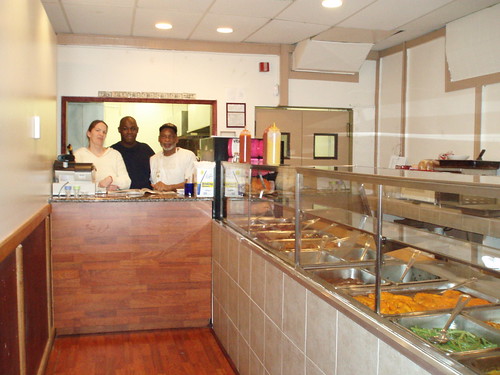
I have received a lot of feedback and in particular, was invited to a restaurant in Jersey City, NJ by one of the owners, Curvon Currington. He welcomed me into his restaurant and told me that he read my book twice! It really made me feel good when he told me that. He was even able to repeat, 'verbatim' some of what I wrote in his most favorite stories.

The name of the restaurant is Cedric's Original Chilltown Restaurant. I went there with a very close friend who has also been very supportive of my effort in writing my first book. I must say, the food was delicious!!! If you're ever in the area, I encourage you stop in... you will be glad you did. It's 'real' soul food, y'all! I had flounder with collards and yams. Delicious!!!!!


Cedric's Original Chilltown Restaurant

302 Martin Luther King Jr. Blvd.

Jersey City, NJ 07305

201-333-5088


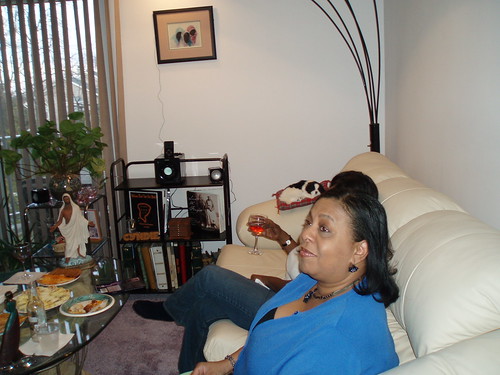
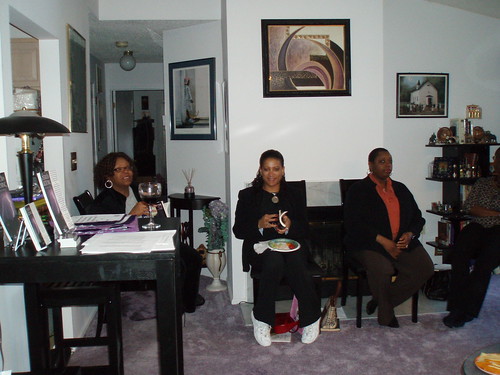
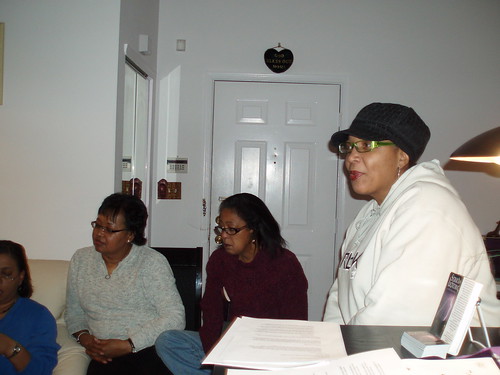
Another friend, Doreen Adams, was so moved by my book that she was inspired to organize a Book Discussion Party. She has truly been very supportive of my endeavor, as well as so many others. We invited some friends to come and relax for an afternoon of food, fun and discussion of stories, as well as issues surrounding the the general theme of the book. It was a wonderful afternoon with friends who came to my home, ready for discussion. Carol Hill, Doreen's cousin agreed to facilitate the event, and she came with some delicious vegetarian meatballs, to add to the cuisine of African Curry Shrimp that I have a really good recipe for. Oh... and Sharon Jones' Sweet Potato Cake was 'to die for'!!!!

We began the discussion by requesting that everyone write down their most favorite and least favorite stories in Struck By Lightning and other bolts of reality.

After taking a poll, the facilitator (Carol Hill), began the discussion of those stories that were selected as the most favorite and least favorite, and the reasons for those decisions. This led to a lively discussion about the first story, Struck By Lightning.


We talked about how our society leads so many women down the road of desperation and denial, that this sometimes leads to women resorting to marrying men who are very toxic to their psyche and physical well being. We talked about the many reasons that some men end up in such a state where they are habitually co-dependent and predatory. We talked about single motherhood and how we must encourage women to make better choices in their lives. We have to get away from stigmatizing women who choose to be alone so that mistakes out of desperation are not made. We also need to encourage men to raise their sons to be men, and help each other.

The general consensus on the 'least' favorite story was Phantasmic Self and the reason was the horrid and selfish nature of the man in the story and the woman who loved him unconditionally and in such a self destructive way. This story is raw with details and focuses on issues that most people would rather not discuss. Yet all could acknowledge that these things do happen, and staying quiet leaves so many to suffer in silence instead of getting the help they need to make the necessary changes to end suffering, and begin healing on the road to happiness and serenity.

Although the issues are heavy, we kept the discussion light with hope as we laughed, talked, ate, drank, and talked some more....


Not everyone was thrilled with the content and theme of the stories and I have come across some people, (mostly men) who seemed defensive after reading the stories in my book. These stories are just an example of what many people deal with in reality and my hope is not that anyone would come away feeling that it is about blame, or that blame should weigh more heavily on men or women, but that we all have a part to play in raising ourselves up to a higher level of consciousness were respect, love, responsibility and accountability are characteristics of priority.


We asked everyone to bring a wrapped book so that we could play a game after the discussion. We wanted to end on a light note so we played a 'Book Swap' game, to round off the evening. We put the wrapped books in a pile and let everyone pick a number out of a bag. The person who had number 1, started the game off by picking one of the wrapped books, and then she unwrapped it. The person with number 2, could either take a wrapped book from the pile, or take the book that person number 1 had. It was a lot of fun!


I ended up with a book I hadn't read before.... Sula by Toni Morrison. I recently finished reading it and it was a good read! I have read a few of Toni Morrison's books and she is one of my favorite authors. There were other interesting books being swapped like Barack Obama's book, 'The Audacity of Hope' and an African-American cookbook that I wanted to get my hands on.... but it was 'swapped' away from me! :)


I was asked why I wrote this book, and if I had plans to write another... and was given an opportunity to tell everyone how it has been a life long dream for me to become a writer. Realizing this dream has been so fulfilling for me, and thanks to my family and friends and especially those who attended this party, I am even more motivated and inspired to continue. I have a few projects drafted out and ideas filed away, but my next project is a novel with a 'science fiction' flare.

Stay tuned.....

I would love for anyone who has read my book to please leave comments and feedback. And don't forget to visit my website regularly... I have many intersting links there as well as some interesting resources.


Cyd's World


Cyd

Monday, October 15, 2007

Bolts of Reality....

***Press Release***


Bolts of Reality
New Short Story Collection Explores Pitfalls of Relationships


FRANKLIN PARK, NJ – Cyd Webster inspires discussion and evaluation of
romantic relationships in a series of short “legacies of dysfunction”, Struck by
Lightning and Other Bolts of Reality (now available through AuthorHouse).
The characters in the stories illustrate the problems that can occur when
baggage from the past is drawn into current relationships. The various couples
appear normal on the outside, but are engulfed in trauma and turmoil behind
the closed doors of their homes. “The characters are narrowly wedged into
tunnel vision, where options and choices seem limited, and settling in their
circumstances becomes the only answer they can imagine,” says Webster.


Each story addresses different stages of romantic love, from single people
looking for companionship to couples involved in marriage, cohabitation or
infidelity. George and Sheila’s conflicting motives lead to maddening
misunderstandings for them both. Tonya, desperate to have a man, ignores
the fact that Lewis has psychotic tendencies. Marsha becomes a caretaker
and martyr as Craig’s dependent lifestyle threatens to destroy her. Charles
and Joan end up in a long-term relationship that is built on a lie but continues
in a manner of twisted convenience. Ronald and Tricia find themselves in a
rocky, violent relationship based on shallow ideals. Candy recklessly searches
for love, and Black and Shareef take the opportunity to satisfy their desires
at her expense. Pastor Jetson and Alison are torn by a happenstance meeting
and strong attraction.


Webster hopes to inspire dialogue in readers as they relate the characters’
exploits to their own lives. “These stories are based on experiences that
many people can identify with, although most people do not want to talk
about these kinds of issues,” she says. “These are stories about everyday
people who are working out scenarios in their lives with what they bring
to it and what is presented to them.”

Webster was born in East Orange, NJ, and lived in Orange, NJ most of her
life. She holds a bachelor’s degree from Ohio State University and attended
graduate school at Montclair State University. She has since worked in
the field of information systems technology. Writing has always been her
passion, and she has had several articles published in company newsletters.
Struck by Lightning and Other Bolts of Reality is her first book. More
information is available at Cyd's World.

Available at AuthorHouse – www.authorhouse.com.
This title can be ordered at bookstores or ordered at your preferred on-line retailer.


So far, I've received a lot of interesting feedback from people who have read my book. Many have told me that they can either identify with some of the stories or know people that some of the characters remind them of. Here are some comments I've received and I encourage anyone to share their comments here on my blog after reading Struck By Lightning and Other Bolts of Reality.

~~~~~~~~~~~~~~~~~~~~~~~


Cyndie,
I read your book. Wow, it was captivating. It was also painful; but, it was all to real for too large a segment of our tortured society. And, if we don't fix the root causes of the dysfunction, it will destroy us all.The other side are the stories of families like yours. We need to write those stories also. And, if all else fails, myth gives us something to strive towards.


Take care,Bill
Virginia


~~~~~~~~~~~~~~~~~~~~~~~


Hey Cyndie,
They were great. I was very impressed, with this being your first official publication and all. I hope that you could turn some of them into full novels. I've left the book with my Aunt as we read all the same things, so I can't quote titles. But, I would've loved to know the background on the crazy woman that sat around in the bar and met men. Also, more about the guy who became DL at his dealer's house.
Oh, and about the perverse boyfriend who was killed in the freak car accident. A few of them ended too quickly for me. But, I was hooked as I completed the book in about 10 hours over the span of 2 days.
Are some of these really true stories?


Luciana Hall


~~~~~~~~~~~~~~~~~~~~~~~

Hi cyndie - I'm not sure if you check out your im (i sent this samemessage there) but this is T aka deanesdream. I wanted to let you know that I read your book over the weekend and it was a good read. very sad but all in all - it gave me a sense of hope not to sell myself short since I have a chance to decide that before i end up or come faceto face with any of those situations, ever again. thanks so much for a VERY real book.


"deanedream"


~~~~~~~~~~~~~~~~~~~~~~~


I finished reading your book and must say that I am certainly impressed. Each chapter was better than the preceding one. I thoroughly enjoyed it. Where on earth did you dream up all the characters? Each one was "a piece of work in progress."The book held my attention and really flowed, making for easy reading. Thank you for a job well done. I regret that your Elaine and Leroy didn't live to see you were published. I can hear Elaine now cracking up over the stories that you wrote.

Joyce
East Orange, NJ

~~~~~~~~~~~~~~~~~~~~~~~


I recently purchased your book Struck By Lightning and I found it to be very enticing, real, and directly on point. All of the stories are events that I could certainly relate to in some way or another. Whenever you come to Georgia, I definitely want to get an autograph because your work is great.

Spenecia
Atlanta, Ga

~~~~~~~~~~~~~~~~~~~~~~~